
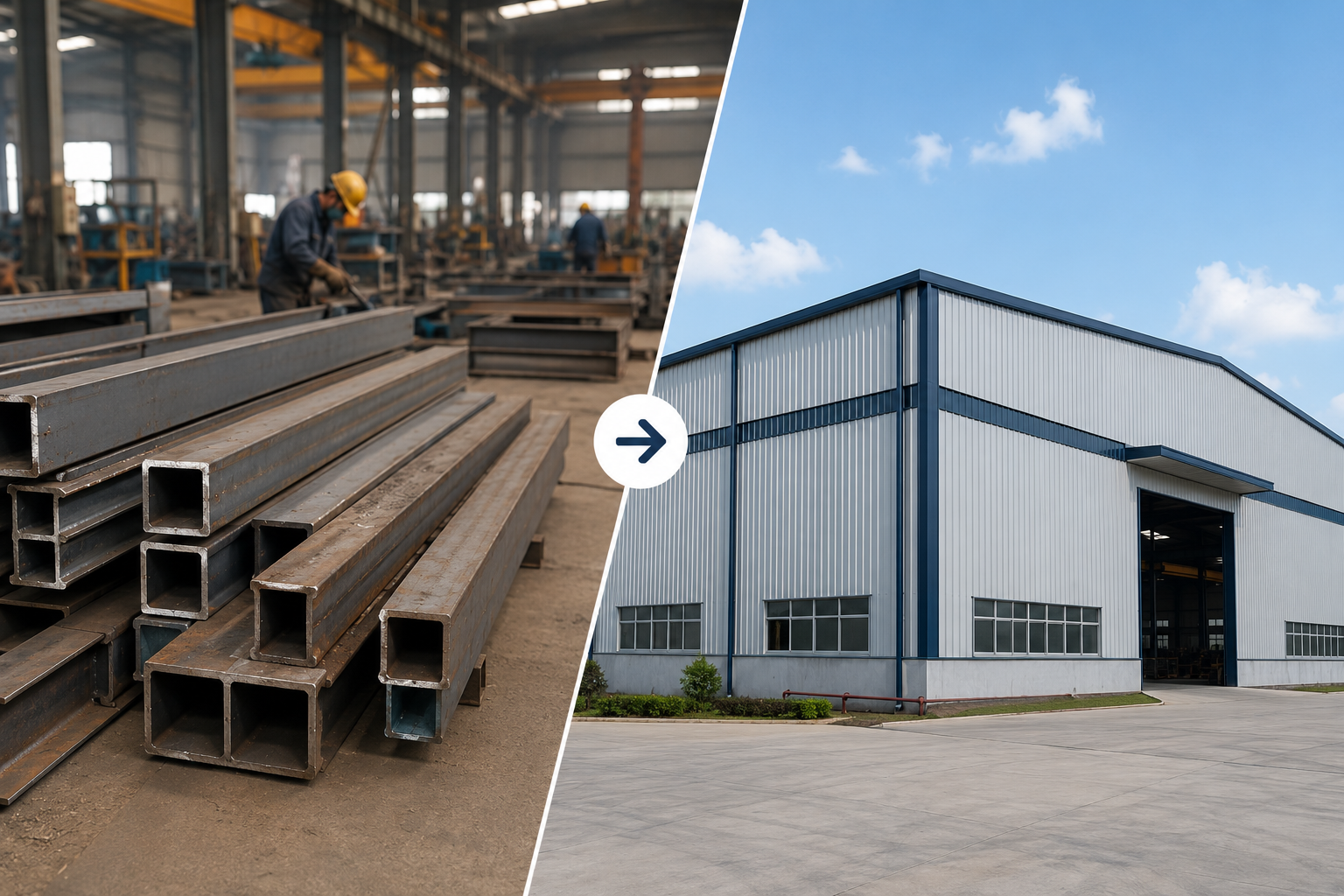
The steel fabrication process transforms raw steel into finished structural components through engineering, cutting, drilling, welding, assembly, surface treatment, quality inspection, and installation. These fabricated components are then used in warehouses, factories, commercial buildings, bridges, and pre-engineered buildings (PEBs).
At Sovereign Infra Steels, this integrated approach supports design, fabrication, and project execution under one roof, enabling coordinated delivery for industrial and pre-engineered building projects.
Unlike steel manufacturing, which produces the raw steel itself, fabrication focuses on transforming steel into usable parts: columns, beams, trusses, rafters, purlins, bracings, platforms, staircases, mezzanine floors, and other industrial structures — which are then transported to the project site for erection.
Although the exact sequence varies by project, the fabrication workflow generally follows these eleven stages, in order:
Engineering and structural design define dimensions, connections, and materials. Detailed drawings and BOM ensure accurate steel fabrication, reduce errors, and improve project efficiency.
High-quality steel sections, plates, beams, and pipes are selected based on structural loads, project specifications, and industry standards for reliable performance.
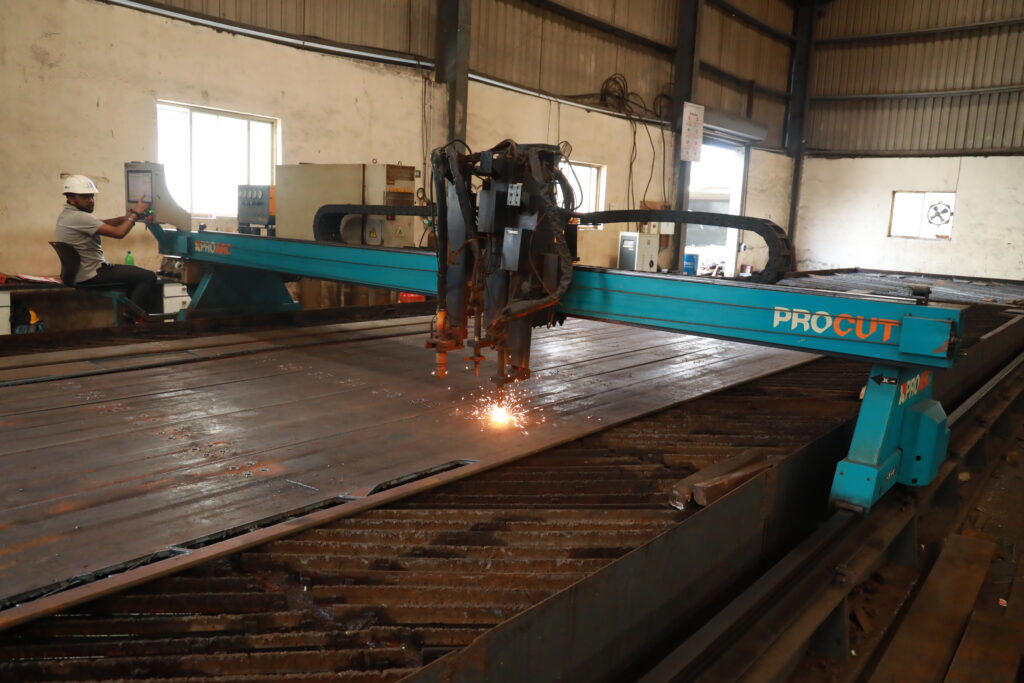
CNC plasma, flame, band saw, and shearing machines cut steel with precision, ensuring accurate dimensions, minimal waste, and faster fabrication.
CNC drilling, punching, slotting, and machining create precise holes and connections, ensuring accurate assembly and structural strength.
Steel components are aligned and assembled before welding. Proper fit-up improves accuracy, minimizes distortion, and speeds up fabrication.
Certified welding joins beams, columns, trusses, and structural components into strong assemblies, ensuring durability and long-term performance.
Steel surfaces are cleaned through grinding, blasting, and rust removal to improve coating adhesion, corrosion resistance, and service life.
Primer, epoxy, polyurethane, or galvanizing protects fabricated steel against corrosion, harsh weather, and industrial environments while improving appearance.
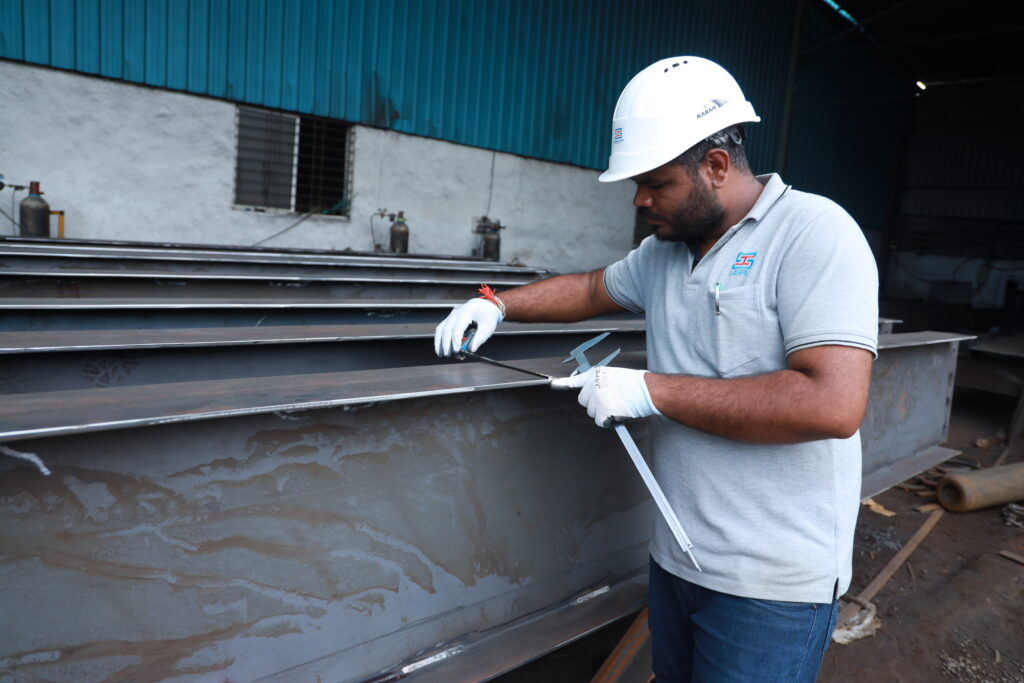
Every fabricated component undergoes dimensional, weld, and coating inspections to ensure compliance with project specifications and quality standards.
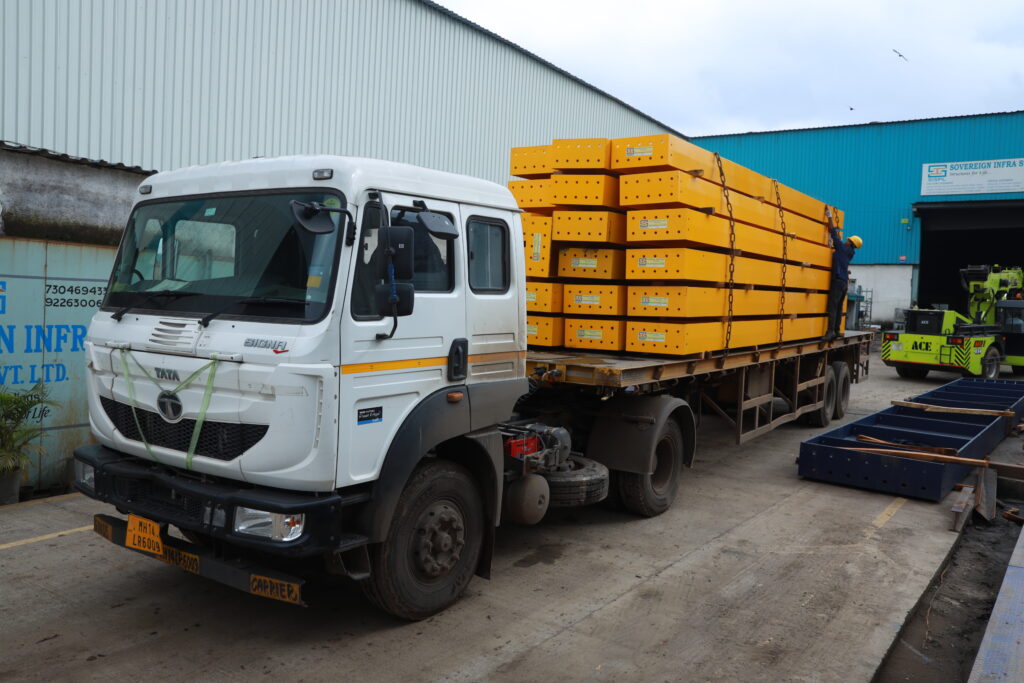
Steel components are marked, bundled, protected, and loaded systematically for safe transportation and efficient on-site installation.
Fabricated steel structures are assembled on-site using cranes and approved drawings, ensuring fast installation, precise alignment, and reliable structural performance.
Advanced facilities rely on specialized equipment for productivity and accuracy: CNC plasma cutting machines, CNC drilling machines, H-beam welding machines, band saw machines, plate rolling machines, shot blasting equipment, and overhead cranes. The Sovereign Infra Steels facility combines CNC processing, H-beam welding, and plasma cutting under one roof.
Fabricated steel supports industrial buildings (manufacturing plants, workshops), warehouses and logistics (distribution centres, fulfilment centres), commercial buildings (offices, shopping centres, exhibition halls), infrastructure (airports, metro stations, bus terminals), energy (power plants, renewable energy structures), and agriculture (storage sheds, processing facilities).
Maintaining dimensional accuracy, managing tight timelines, coordinating design revisions, handling large members, ensuring weld quality, and preventing coating damage in transit all require experienced engineering and manufacturing planning.
Sovereign Infra Steels delivers “Design, Build, Deliver — All Under One Roof”: end-to-end design, fabrication and erection; in-house engineering and detailing; CNC plasma cutting and drilling; H-beam fabrication and welding; roofing and cladding systems; PEB solutions; and turnkey industrial construction from its manufacturing facility at Kharabwadi, Chakan, Pune and Mhalunge – Chakan, Pune.
| Stage | Purpose | Outcome |
|---|---|---|
| Engineering & Design | Prepare drawings and calculations | Accurate fabrication plans |
| Material Selection | Select suitable steel sections | Right material for structural requirements |
| CNC Cutting | Cut steel to required dimensions | Precision components |
| Drilling & Machining | Prepare connection points | Accurate assembly |
| Fit-Up | Verify alignment before welding | Proper joint preparation |
| Welding | Join structural members | Completed fabricated assemblies |
| Surface Preparation | Clean steel for coating | Improved coating adhesion |
| Protective Coating | Protect against corrosion | Enhanced durability |
| Inspection | Verify quality and dimensions | Conforming fabricated members |
| Dispatch | Pack and transport | Ready for erection |
| Surface Preparation | Clean steel for coating | Improved coating adhesion |
| Site Erection | Assemble at project site | Completed steel structure |
Steel fabrication is far more than simply cutting and welding steel—it is a structured engineering and manufacturing process that transforms raw materials into reliable structural components for industrial, commercial, and infrastructure projects. Every stage, from engineering and material selection to precision fabrication, quality inspection, protective coating, and site erection, contributes to the performance, safety, and longevity of the finished structure.
For organizations planning warehouses, manufacturing plants, logistics parks, or pre-engineered buildings, partnering with a fabrication company that combines engineering expertise, modern manufacturing technology, and quality-focused execution can help deliver projects more efficiently and consistently.
Our Projects
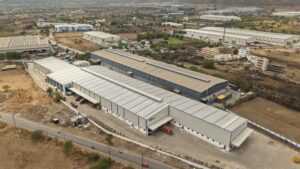
Hyundai Glovis India
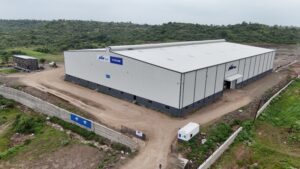
JSW Steel Ltd.
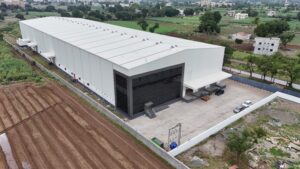
John Deere
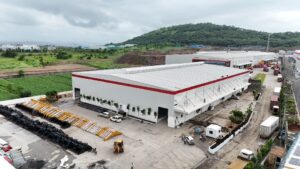
SANY Heavy Industries
Hyundai Mobis
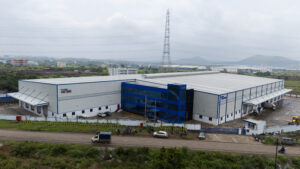
Asahi India Glass Ltd.
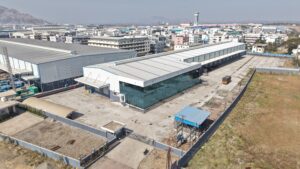
General FAQs
Steel fabrication is the process of converting raw steel into structural components such as beams, columns, trusses, and platforms through cutting, drilling, welding, assembly, inspection, and finishing.
Steel manufacturing produces raw steel, while steel fabrication transforms that steel into finished components ready for construction or industrial use.
The typical process includes engineering, material selection, cutting, drilling, assembly, welding, surface preparation, protective coating, inspection, dispatch, and site erection.
CNC cutting improves dimensional accuracy, repeatability, and material utilization, helping reduce errors during fabrication and installation.
Need Help?
Download Our Company Profile
Please fill in the form below to receive the brochure.
This will close in 0 seconds
Email us with any questions or inquiries.