
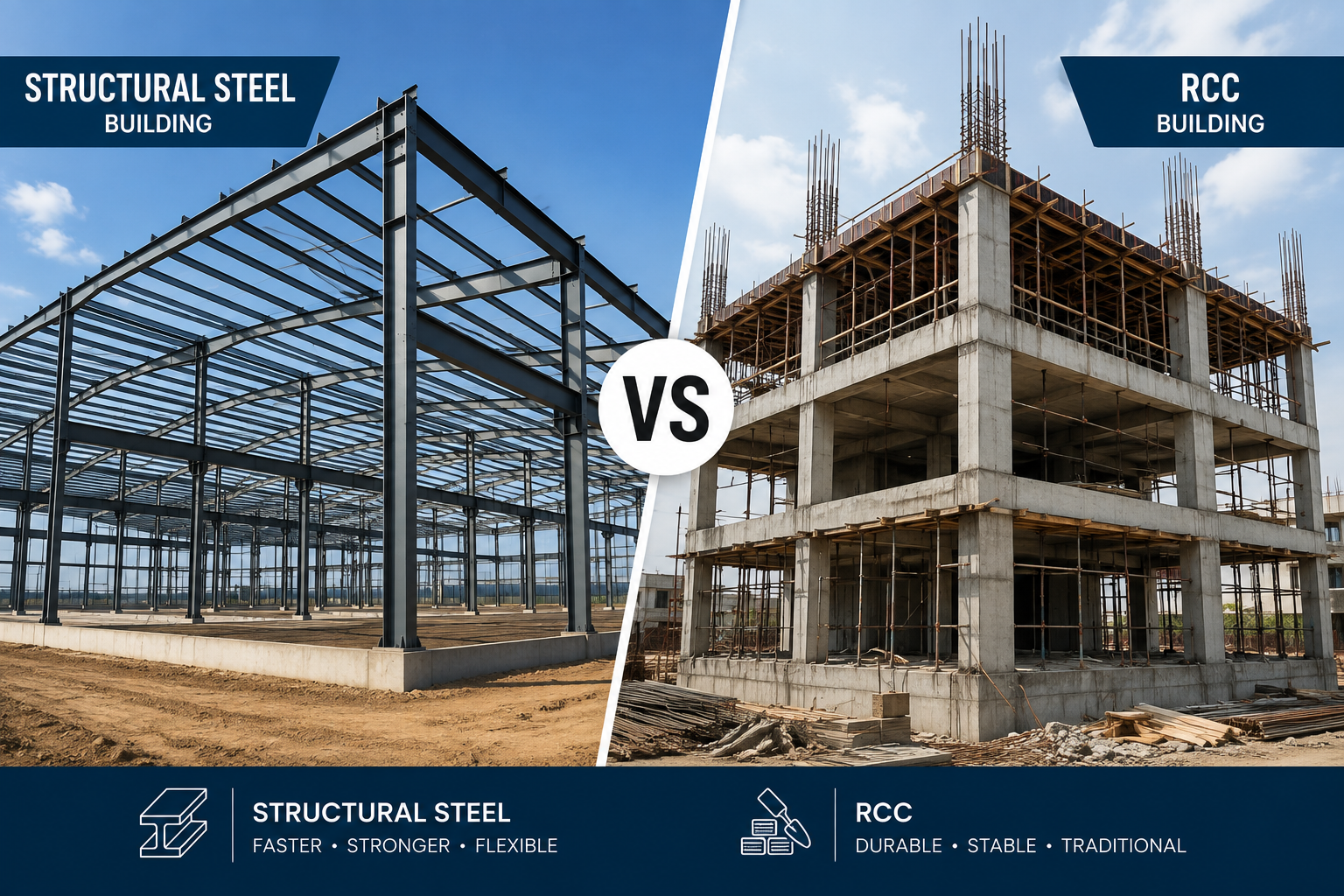
Structural steel and RCC (Reinforced Cement Concrete) are both widely used in construction, but they serve different project requirements. Steel is commonly selected for projects requiring faster construction, large clear spans, flexibility, and future expansion, while RCC is often used for residential buildings and projects where mass concrete construction is preferred.
Instead of asking which material is universally better, the more useful question is which structural system suits your project. This guide compares the two across the factors that actually drive that decision.
Understanding the differences between structural steel and RCC can help business owners, developers, and project teams make informed decisions about construction time, structural performance, cost, and future expansion. The right choice depends on the building’s purpose, site conditions, engineering requirements, and budget.
Fabricated steel members — columns, rafters, purlins, bracing — manufactured in a factory and assembled on site.
Concrete combined with embedded steel reinforcement (rebar) — concrete for compression, rebar for tension.
| PARAMETER | STRUCTURAL STEEL | RCC |
|---|---|---|
| Construction speed | Faster factory fabrication + site assembly | Multiple on-site stages incl. curing |
| Structural weight | Lighter | Heavier |
| Large clear spans | Excellent | Often needs added supports |
| Design flexibility | High | Moderate |
| Future expansion | Easier | More complex |
| Recyclability | Highly recyclable | More limited |
These are general comparisons rather than fixed rules. The performance and cost of either system depend on structural design, material specifications, construction methods, and site conditions.
Steel’s high strength-to-weight ratio supports long-span structures with comparatively lighter members — high tensile strength, efficient load transfer, consistent material properties. RCC combines concrete’s compressive strength with rebar’s tensile contribution, and suits projects where mass concrete framing fits the design.
Both systems can provide the required structural strength when designed correctly. The choice depends on the loads the building must carry, the required spans, the structural layout, and the applicable design standards.
Steel members are fabricated off-site in parallel with site prep, giving faster erection, better schedule control, and earlier occupancy. RCC follows a sequential process — formwork, reinforcement, pour, cure, strip — where each stage generally waits on the last, extending timelines.
For industrial projects, off-site fabrication can help reduce the amount of work required at the construction site. However, actual completion time depends on design approvals, fabrication capacity, transportation, foundation readiness, erection, and project complexity.
Both systems can be engineered to safely carry design loads. Steel is frequently chosen for heavy industrial facilities, crane-supported buildings, and long-span warehouses; RCC is capable when spans, loads, and architectural intent align with reinforced concrete framing.
The structural system should be selected after evaluating dead loads, live loads, wind loads, seismic forces, equipment loads, and any special operational requirements. Neither material is automatically better for every loading condition.
Wide column-free spaces, future expansion, mezzanines, overhead cranes, and flexible layouts are efficiently accommodated by fabricated steel members. RCC can achieve complex forms too, but later modifications often require more structural intervention.
Structural steel can be particularly useful when a building needs open floor space or the flexibility to change its layout. For example, warehouses and manufacturing facilities may require space for material movement, machinery, storage racks, or overhead cranes. These requirements should be considered during the initial design.
Steel’s ability to create large clear spans with fewer internal columns is especially valuable for warehouses, logistics centres, manufacturing plants, aircraft hangars, and sports facilities — maximizing usable floor space.
Fewer internal columns can improve the use of floor space in industrial buildings. The achievable span depends on the structural design, roof loads, wind conditions, member sizes, and support arrangements.
“Which is more cost-effective?” depends on whether you’re looking at initial construction cost or lifecycle cost. Steel’s faster construction, lower on-site labour, reduced CNC wastage, and shorter completion time can lower lifecycle cost for warehouses and factories where speed to market matters. RCC’s more labour-intensive, sequential process often means longer schedules that affect financing and overheads — even where material costs are comparable.
| Cost factor | STRUCTURAL STEEL | RCC |
|---|---|---|
| Initial material cost | Project dependent | Project dependent |
| Construction speed | Faster | Slower |
| Labour requirement | Lower on-site labour | Higher on-site labour |
| Future expansion | Easier | More extensive modification |
| Lifecycle cost | Often lower for industrial projects | Depends on maintenance & project type |
To compare costs accurately, evaluate the complete project rather than material prices alone. Include foundations, structural members, fabrication, transport, erection, labour, fire protection, maintenance, and future expansion. A detailed estimate for both systems provides a more reliable basis for decision-making.
Properly fabricated, protected, and maintained steel offers high strength, consistent properties, and resistance to shrinkage cracking. RCC also delivers long service life when concrete quality, reinforcement protection, curing, and environmental exposure are well managed.
Steel structures require suitable corrosion protection, while RCC structures need appropriate concrete quality and reinforcement protection. The service life of either system depends on design, construction quality, environmental exposure, and maintenance.
Steel’s ductility lets it deform under seismic loading without sudden brittle failure when properly engineered — a common reason it’s preferred in earthquake-prone areas. Well-designed RCC also performs effectively under seismic conditions, depending on detailing and code compliance.
Earthquake performance depends on the complete structural system, including connections, member detailing, bracing, foundations, and compliance with applicable seismic design standards. Material selection alone does not guarantee earthquake safety.
Steel loses strength at elevated temperatures and may need passive fire protection for specific requirements. Concrete is inherently fire-resistant due to its non-combustible nature.
Key point: fire safety depends on the complete structural design, occupancy type, and code compliance — not solely the choice between steel and RCC.
The required fire resistance depends on the building’s use, applicable regulations, and specified fire rating. Steel structures may require suitable fire protection, while RCC performance depends on concrete cover, member dimensions, reinforcement detailing, and the design fire conditions.
Steel is highly recyclable, fabrication reduces material wastage, and buildings can often be modified without full demolition. Concrete is widely available and durable, but cement manufacturing carries significant carbon emissions, and recycling options differ from steel.
The environmental impact of either system depends on material quantities, manufacturing, transportation, construction waste, maintenance, and the building’s service life. Comparing the overall lifecycle impact is more useful than evaluating recyclability alone.
Additional bays, mezzanine floors, and layout modifications are typically easier to add to a steel structure with less disruption. Expanding an RCC structure may require more extensive demolition, strengthening, or redesign.
Future expansion should be considered during the initial engineering stage. Designing for potential additional bays, equipment loads, or mezzanine floors can help avoid expensive structural modifications later. Any proposed expansion must be checked by a qualified structural engineer.
Steel needs periodic inspection, coating monitoring, corrosion checks, and connection checks. RCC maintenance covers crack repair, waterproofing, reinforcement corrosion treatment, and patch repairs — the right strategy depends on environment, construction quality, and usage.
Routine inspections help identify issues early. Steel maintenance may include repairing damaged protective coatings and checking connections, while RCC maintenance may involve addressing cracks, water ingress, and reinforcement corrosion. Maintenance requirements vary according to the building and its operating environment.
| FACTOR | 🏗️ STRUCTURAL STEEL | 🧱 RCC |
|---|---|---|
| Construction speed | ★★★★★ Pre-fab enables 30–50% faster builds | ★★ Needs shuttering, rebar, pour, curing |
| Strength & load capacity | ★★★★★ | ★★★ |
| Structural weight | ★★★★★ Lightweight | ★★ Heavier, larger foundations |
| Sustainability | ★★★★★ 100% recyclable | ★★ Higher embodied carbon |
| Design flexibility | ★★★★★ | ★★★ |
| Project type | STRUCTURAL STEEL | RCC |
|---|---|---|
| Warehouse | ★★★★★ | ★★★ |
| Factory building | ★★★★★ | ★★★ |
| Logistics park | ★★★★★ | ★★★ |
| Cold storage | ★★★★★ | ★★★ |
| Commercial complex | ★★★★ | ★★★★ |
| Residential building | ★★★ | ★★★★★ |
| Multi-storey apartment | ★★★ | ★★★★★ |
| Large clear-span building | ★★★★★ | ★★ |
| Future expansion | ★★★★★ | ★★ |
The decision matrix is a general guide, not a substitute for engineering analysis. The most suitable option depends on the project’s design, functional requirements, local conditions, and total construction cost.
Industrial buildings often require large usable spaces, efficient material movement, and the ability to accommodate machinery or future expansion. Structural steel and pre-engineered building systems can be suitable for these requirements, depending on the building design.
A pre-engineered building manufacturer can help assess the structural layout, roof system, support requirements, and project specifications for suitable industrial applications. For warehouses and factories, the decision should consider the complete building system rather than the frame material alone.
There is no universal winner in the Structural Steel vs RCC debate. The best choice depends on the building’s purpose, engineering requirements, project timeline, budget, and future plans.
For many warehouses, factories, logistics parks, cold storage facilities, and pre-engineered buildings, structural steel offers advantages such as faster construction, large clear spans, design flexibility, and easier expansion. RCC continues to be a strong choice for many residential and conventional construction projects where reinforced concrete framing aligns with the design objectives.
Working with an experienced engineering and fabrication partner helps ensure that the selected structural system is optimized for performance, cost, and long-term value.
Sovereign Infra Steels is a structural steel fabrication company offering PEB manufacturing, industrial sheds, warehouses, and turnkey industrial construction solutions. As a PEB manufacturer in Pune, the company supports industrial projects with building solutions based on project requirements. The appropriate structural system should always be selected according to the building’s intended use, engineering design, and budget.
Our Projects
Hyundai Glovis India
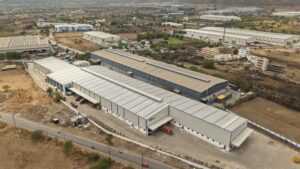
JSW Steel Ltd.
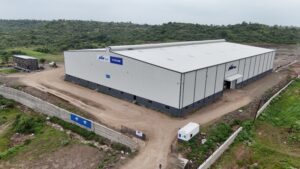
John Deere
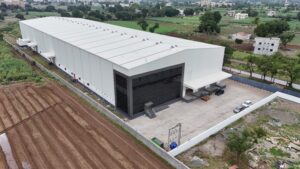
SANY Heavy Industries
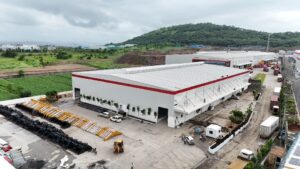
Hyundai Mobis
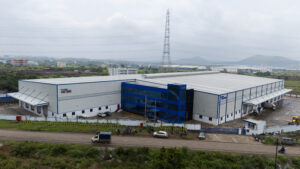
Asahi India Glass Ltd.
General FAQs
Structural steel uses fabricated steel members such as beams and columns to support a building. RCC combines concrete with steel reinforcement. Both can provide safe, durable structures when properly designed.
The cost depends on the building design, material prices, foundation requirements, construction time, labour, and maintenance. Compare complete project estimates before choosing a system.
Yes. Structural steel is often used for factories, warehouses, and large-span industrial buildings because it can provide open spaces and support future expansion when properly designed.
Structural steel is often considered for warehouses that require large clear spans and faster construction. RCC can also be suitable, depending on the layout, budget, site conditions, and operational requirements.
Need Help?
Download Our Company Profile
Please fill in the form below to receive the brochure.
This will close in 0 seconds
Email us with any questions or inquiries.